
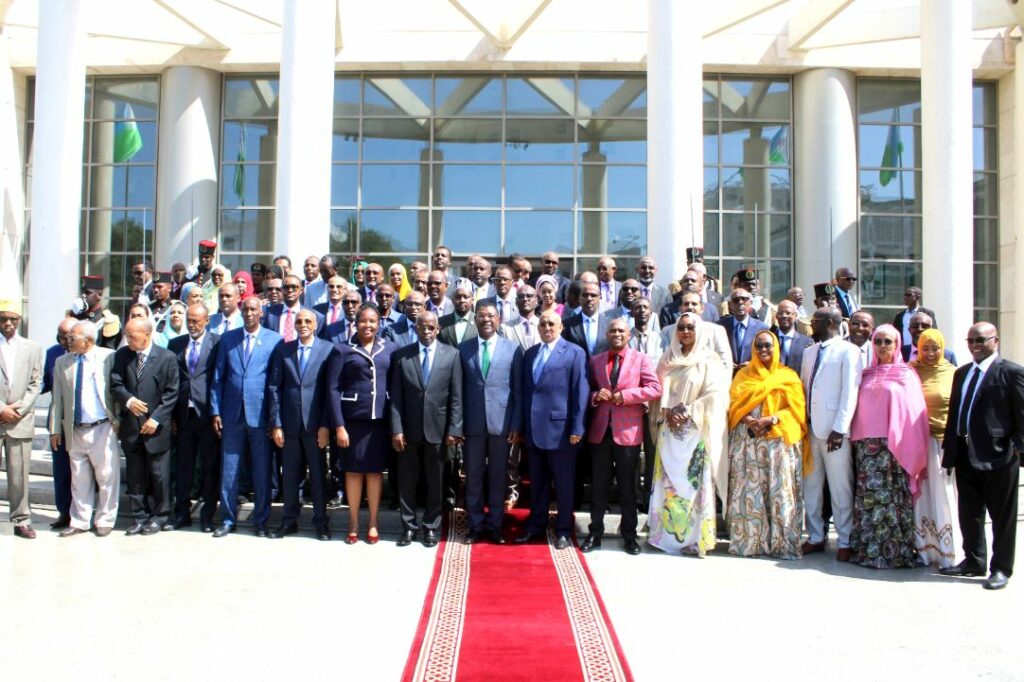
The National Assembly of the Republic of Djibouti is the central institution of the country’s democratic governance. It is responsible for enacting laws, overseeing government operations, and ensuring transparency, accountability, and the rule of law. The Assembly represents the citizens of Djibouti and serves as a forum where national issues are debated, policies are shaped, and decisions are made to guide the nation’s development.
The Assembly is composed of elected members who carry the mandate of the people. These representatives work diligently to reflect the interests, aspirations, and rights of all citizens. Through structured debates, legislative reviews, and committee oversight, the National Assembly ensures that the voices of the people are heard and that the government operates in accordance with democratic principles.
The leadership of the National Assembly, including the Speaker and Deputy Speaker(s), plays a pivotal role in guiding the work of the Assembly. The Speaker presides over sessions, ensures that proceedings are conducted fairly, and represents the Assembly in national and international forums. The Deputy Speaker(s) assist in managing legislative activities and support the Speaker in fulfilling the Assembly’s mandate. Together, the leadership ensures that the institution functions efficiently and transparently.
To perform its legislative and oversight duties effectively, the National Assembly operates through a number of standing committees. These committees examine proposed legislation, evaluate government programs, and provide informed recommendations to improve governance. They play a critical role in scrutinizing laws before they are passed, ensuring that legislation is comprehensive, fair, and aligned with national priorities.
The National Assembly is committed to open governance and public participation. Citizens have access to parliamentary documents, records of legislative sessions, and reports on ongoing initiatives. This access allows the public to follow the work of the Assembly, understand policy decisions, and engage with the democratic process. By providing transparency, the Assembly strengthens public trust and reinforces the accountability of government institutions.
65 – Members of Parliament representing the people of Djibouti
12 – Standing Committees responsible for legislation and oversight
200+ – Laws Enacted to guide national development
50+ – Public Reports Published ensuring access to parliamentary activities
100% – Commitment to Transparency and accountable governance
The National Assembly of Djibouti continues to uphold democratic values and serves as a cornerstone of governance. Through its legislative work, oversight functions, and commitment to the public, it contributes to the social, economic, and political progress of the nation. Its dedication to serving the people reflects the Assembly’s core values of integrity, responsibility, and national service.

The National Assembly of the Republic of Djibouti is the unicameral legislative body of the country. It consists of 65 elected members who serve five-year terms, enacts laws, oversees government programs, and provides public access to official documents and reports.
National Assembly of the Republic of Djibouti
P.O. Box 138, Djibouti City, Djibouti